
Bifidobacterium animalis spp lactis DSM 15954
Bifidobacterium as a genus
Bifidobacteria are gram-positive, nonmotile anaerobic bacteria. They are one of the major genera of bacteria that make up microbiota in mammals. The genus possesses a unique ability to pathway to ferment carbohydrates and are able to ferment human milk oligosaccharides as well as plant oligosaccharides.
Bifidobacterium animalis spp animalis and Bifidobacterium animalis spp lactis
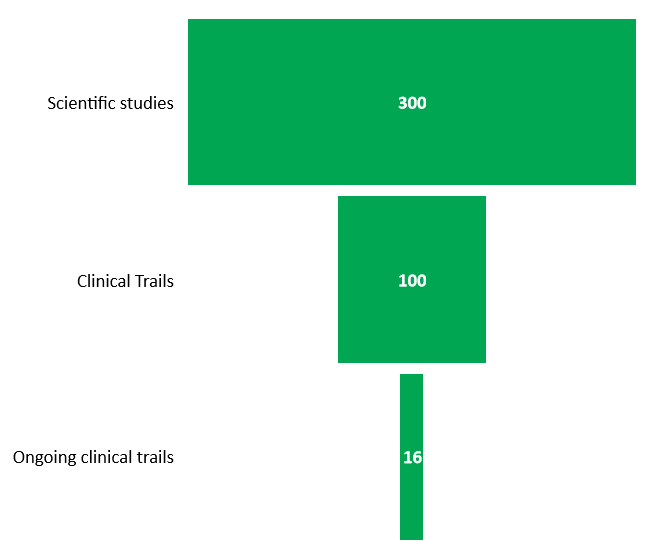
Bifidobacterium animalis spp lactis DSM 15954, >300 studies, > 100 clinical studies, 16 ongoing
Previously Bifidobacterium animalis and Bifidobacterium lactis were described as two separate species but are now both considered B. animalis with subspecies animalis and lactis respectively. The species grow well in milk and is resistant to acid and oxidative stress. Research has identified a number of species abilities such as immune modulation, epithelial adherence and enhancement of gut barrier function thus
making it clinically relevant (1).
The genome of B. animalis spp lactis DSM 15954 has been published and contains 1642 genes (2). It can survive down to pH 2, is able to grow in presence of bile salts and can grow on several carbohydrate sources (3).
Example of studied health effects
- Defecation frequency (4) In a study of 1248 individuals Eskesen et al found that the defecation frequency was significantly higher in the active group as compared with placebo.
- Immune function (5) Rizzini et al studied immune function by measuring vaccine response in healthy volunteers. It was found that treatment with B. animalis spp lactis DSM 15954 resulted in increased vaccine specific antibodies as compared with the control group.
Children´s health – diarrhea (6) 55 infants aged 5-24 months were evaluated on diarrhea in a study by Saveedra et al, it was found that 7% developed diarrhea during the test period vs 31% of the control group.
- Rizzini discuss two possible mechanism of actions which both involve interactions with immune cells within the host’s gut-associated lymphoid tissue (5). First changes in the microbiota could result in altered concentrations of signaling molecules such as SCFA or peptides within the gut lumen that directly affects the host’s immune cells. Secondly, a direct contact could be made between the host’s immune cells and gut bacteria which can alter immune cell activity. Whichever mechanism, the altered immune cell activity must then be transferred systemically, which is possible because of recirculation of the bodys immune cells between body compartment.
1. Quiqley, E.M.M The microbiota in Gastrintestinal Pathophysiology (2017) Chapter 13.
2. Garrigues, C.; Johansen, E.; Pedersen, M.B. Complete genome sequence of Bifidobacterium animalissubsp. lactis BB-12, a widely consumed probiotic strain. J. Bacteriol. 2010, 192, 2467–2468.
3. Vernazza, C.L.; Gibson, G.R.; Rastall, R.A. Carbohydrate preference, acid tolerance and bile tolerance in five strains of Bifidobacterium. J. Appl. Microbiol. 2006, 100, 846–853.
4. Eskesen D, et al. Effect of the probiotic strain Bifidobacterium animalis subsp. lactis, BB-12®, on defecation frequency in healthy subjects with low defecation frequency and abdominal discomfort: a randomised, double-blind, placebo-controlled, parallel-group trial. Br J Nutr. 2015;114(10):1638-46
5. Rizzardini G, et al. Evaluation of the immune benefits of two probiotic strains Bifidobacterium animalis ssp. lactis, BB-12® and Lactobacillus paracasei ssp. paracasei, L. casei 431® in an influenza vaccination model: a randomised, double-blind, placebo-controlled study. Br J Nutr. 2012;107(6):876-84
6. J M Saavedra 1, N A Bauman, I Oung, J A Perman, R H Yolken. Feeding of Bifidobacterium bifidum and Streptococcus thermophilus to infants in hospital for prevention of diarrhoea and shedding of rotavirus. Lancet. 1994 Oct 15; 344 (8929) :1046-9.
 optiome.com